Protector Boats Canada
Considering a RIB boat for Canadian waters? Protector Boats Canada can help you compare models, specify the right build, and plan ordering and delivery. Inquire about a Protector, or speak with the team directly: +1 604 908 6590 · info@protectorcanada.com.
Rigid Hull, Inflatable Collar: How a RIB Is Built
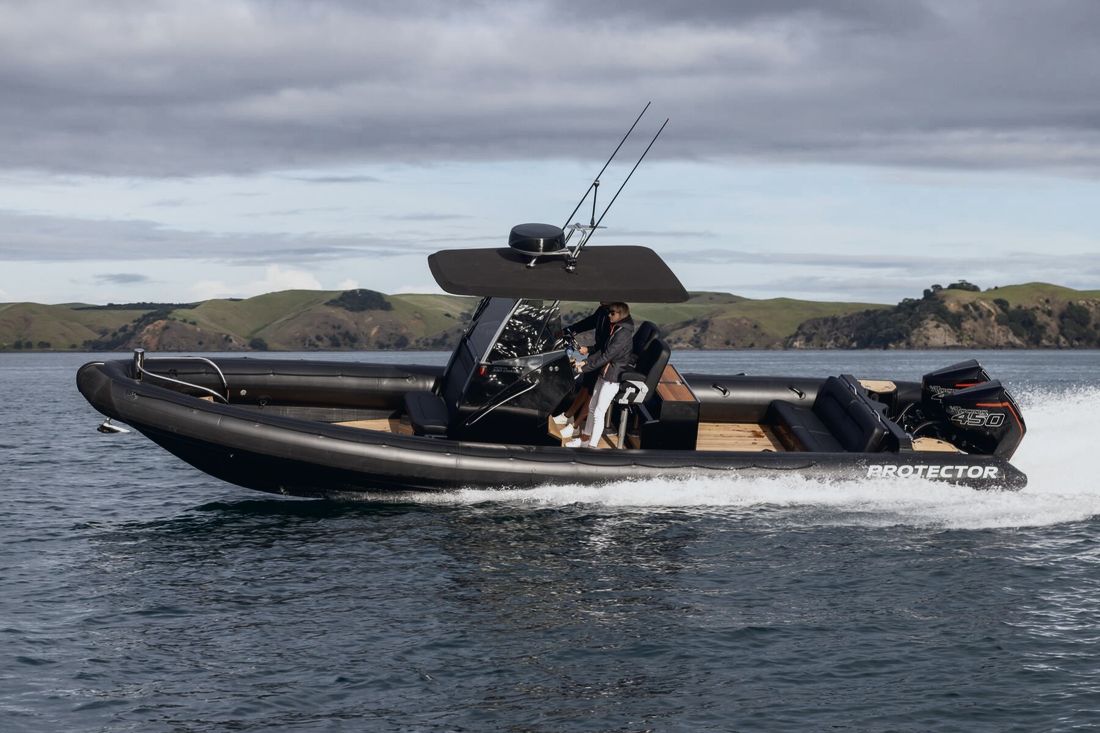
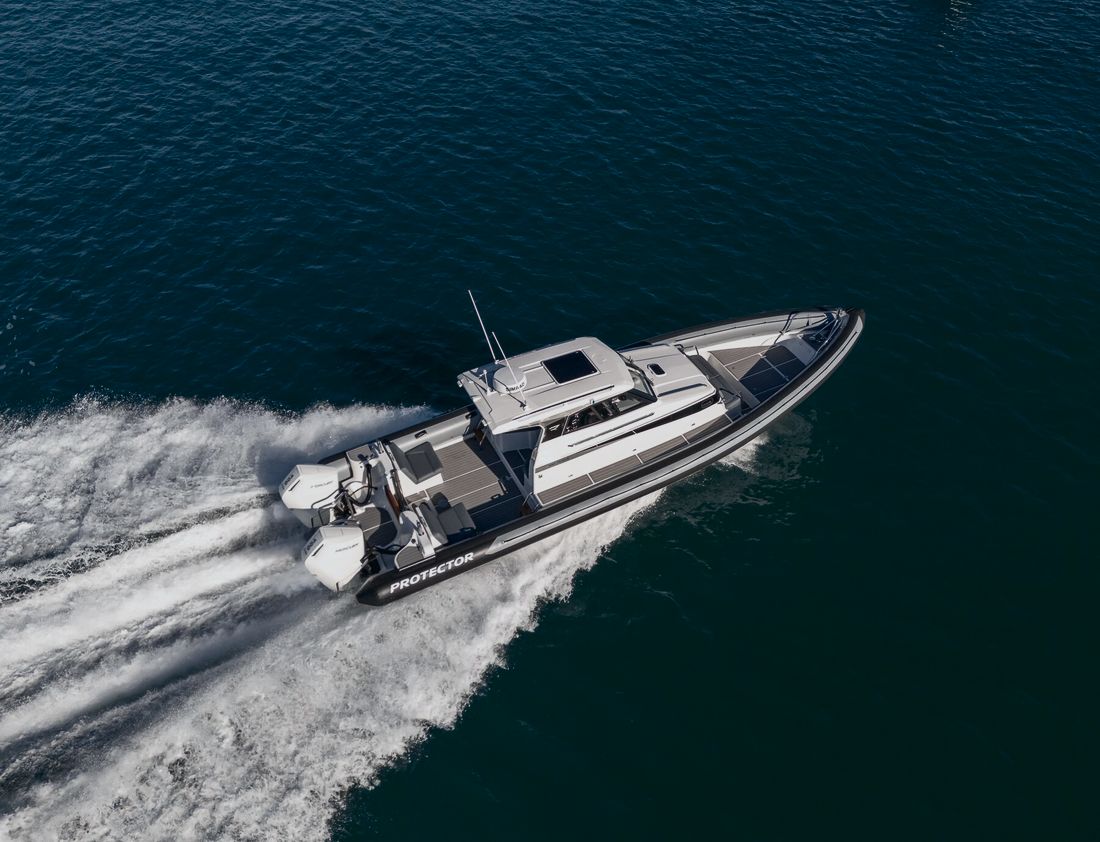
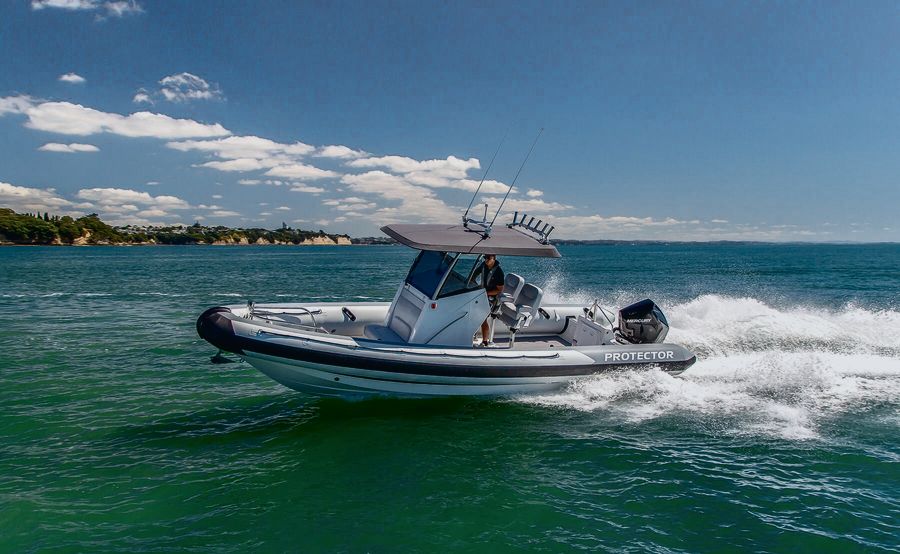
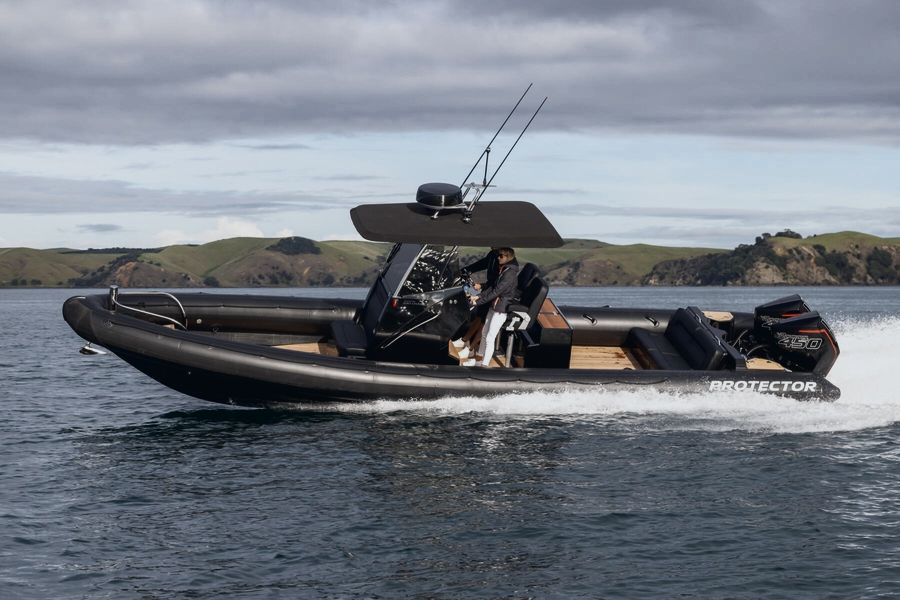
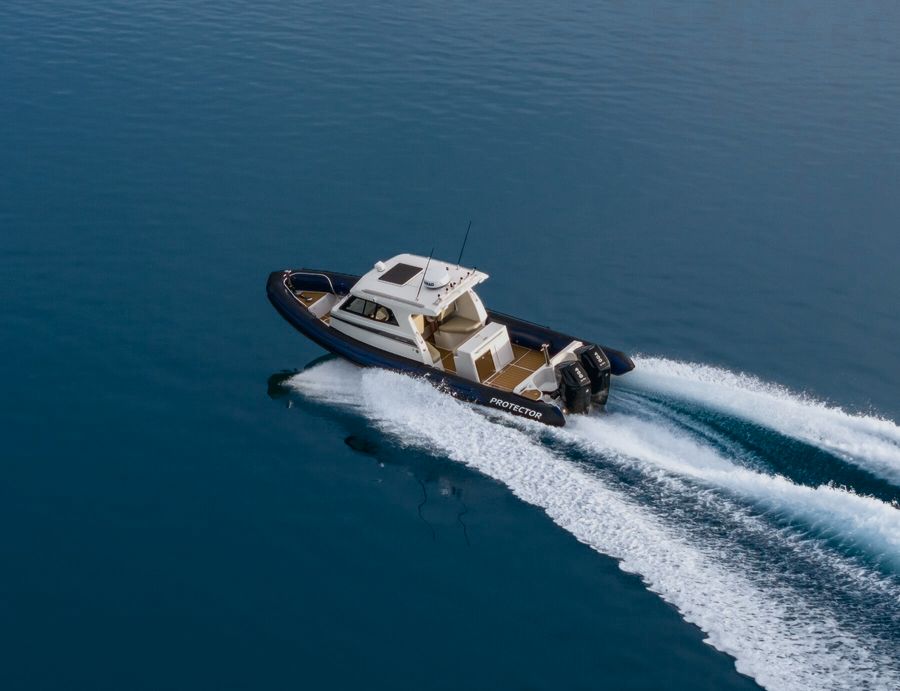
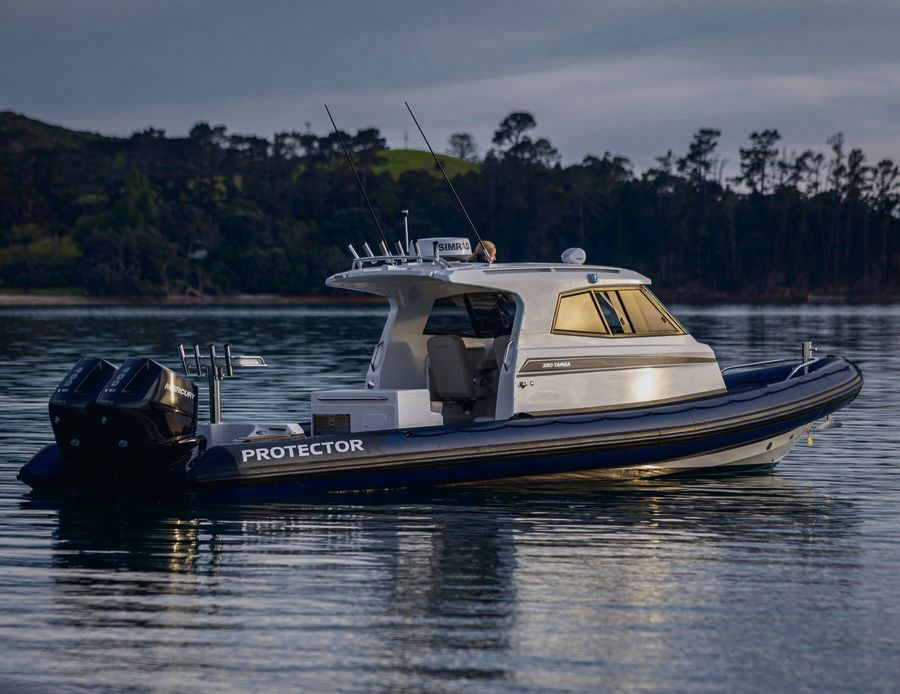
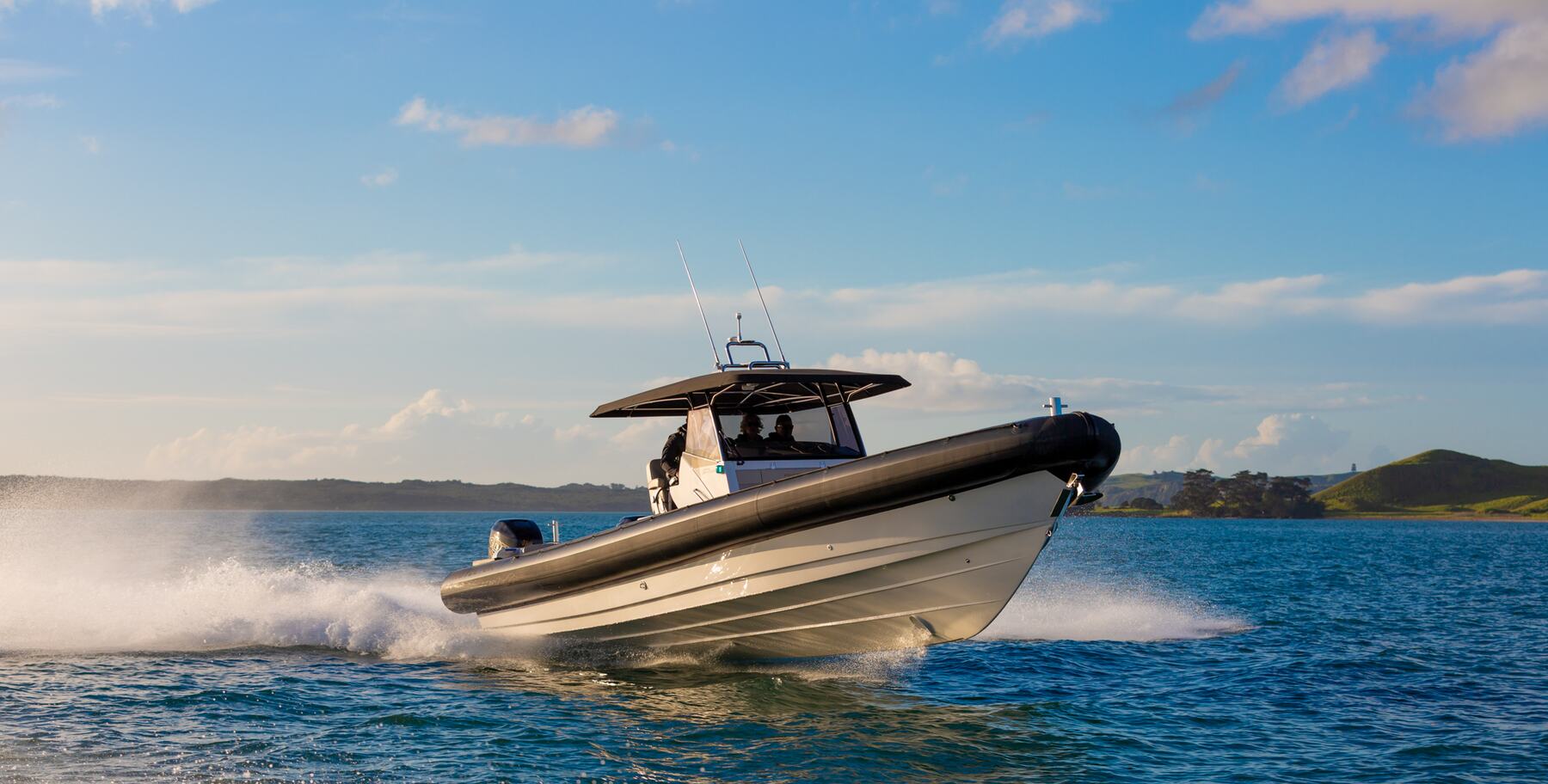
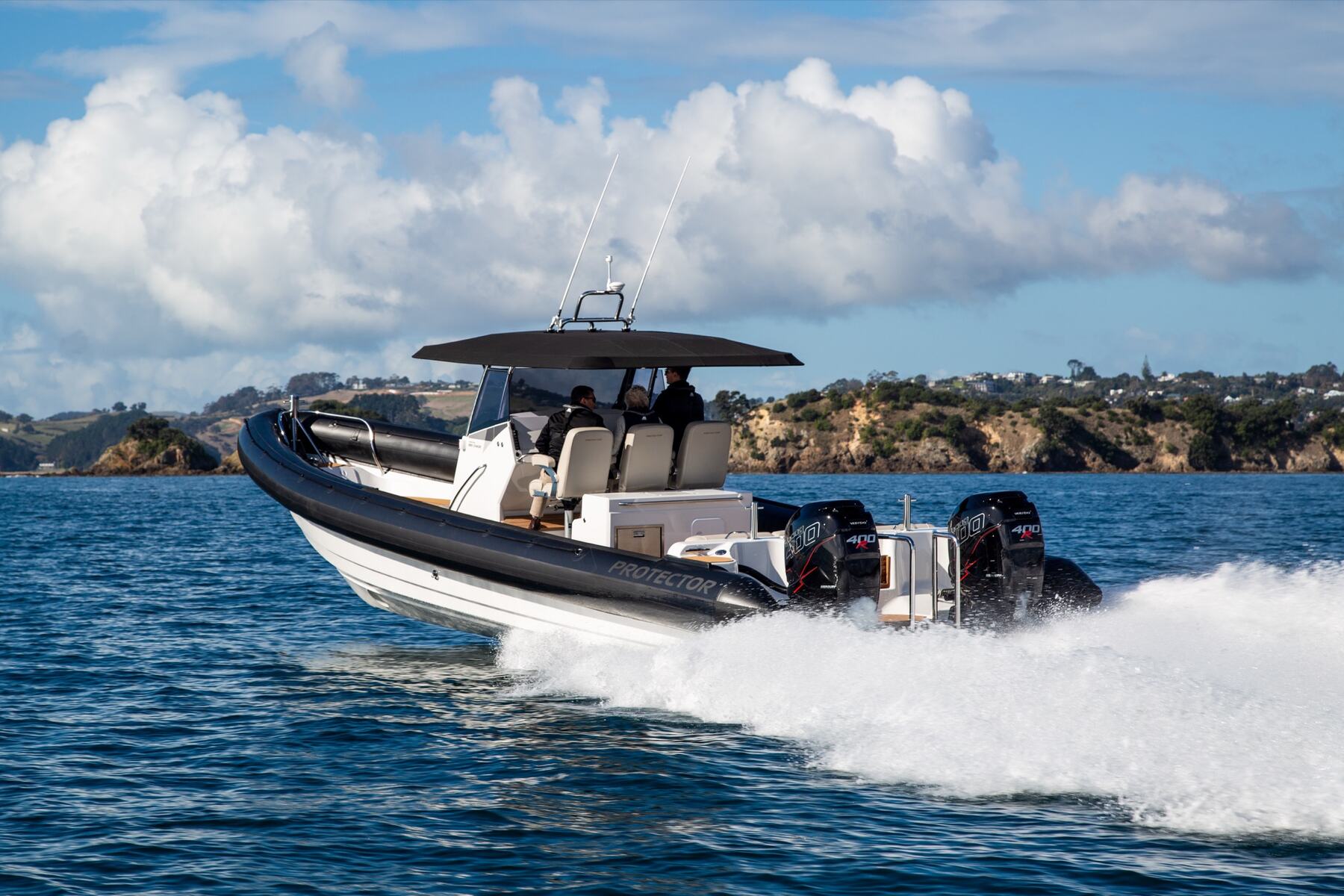
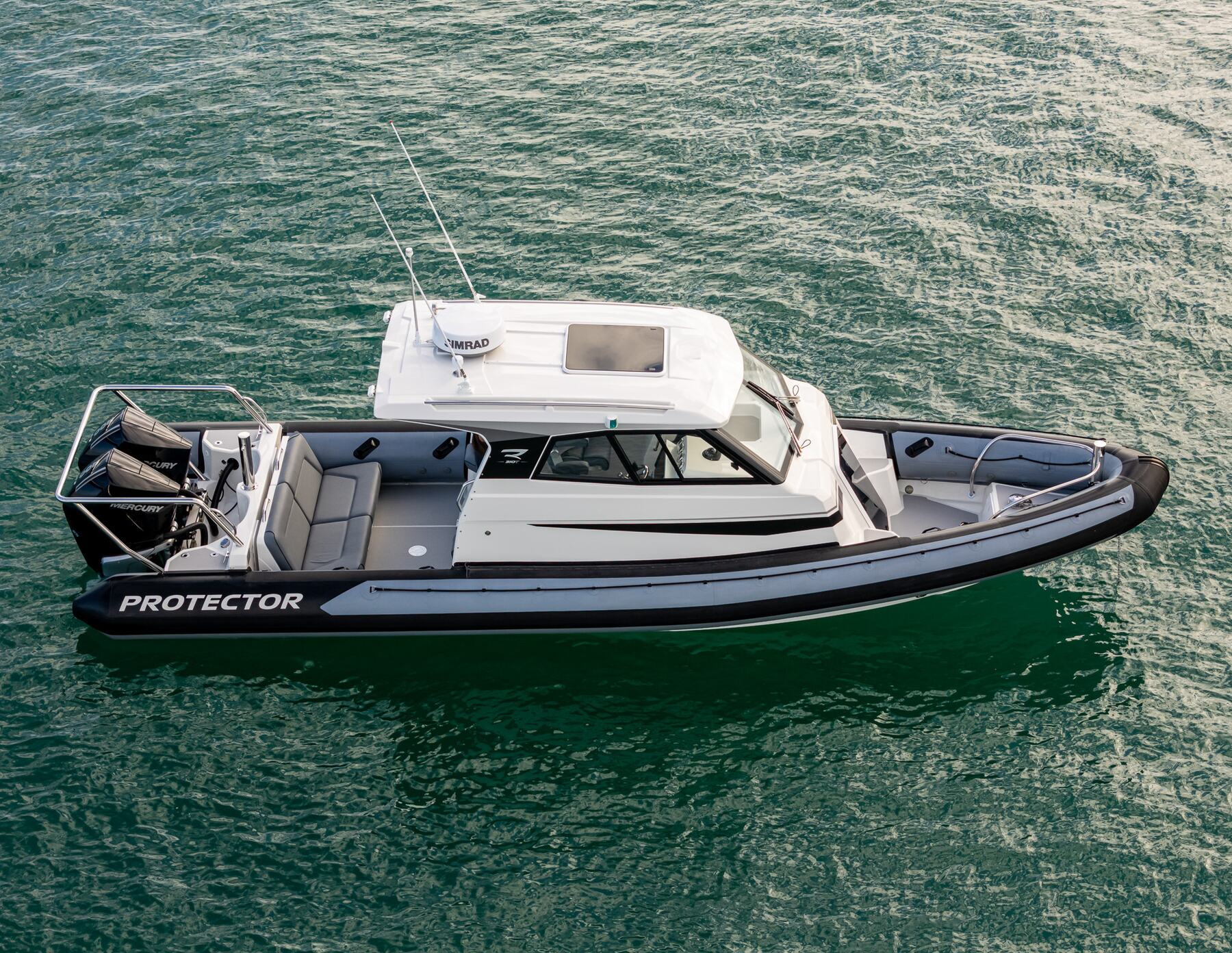
A RIB's rigid hull is a deep-V or modified-V hull built in fibreglass or aluminum, the same construction used in any planing powerboat. It's what lets a RIB get up on plane, carry real load, and hold a line at speed.
Around the topsides sits the inflatable collar: a series of separate air chambers, usually made from Hypalon, a synthetic rubber valued for UV and abrasion resistance, or PVC, which is lighter and more affordable but generally less durable in harsh climates. The collar isn't just a bumper. It adds buoyancy at the waterline so the boat rides higher and drier, it flexes and absorbs impact instead of transmitting it straight into the hull and crew, and because each chamber is sealed independently, damage to one section won't sink the boat.
The result is a hull that handles like a hardshell boat but forgives like an inflatable. That's the reason the category exists, and why the basic formula has held for decades with only incremental changes to hull shape, materials, and collar construction.
Why RIBs Perform in Rough Water
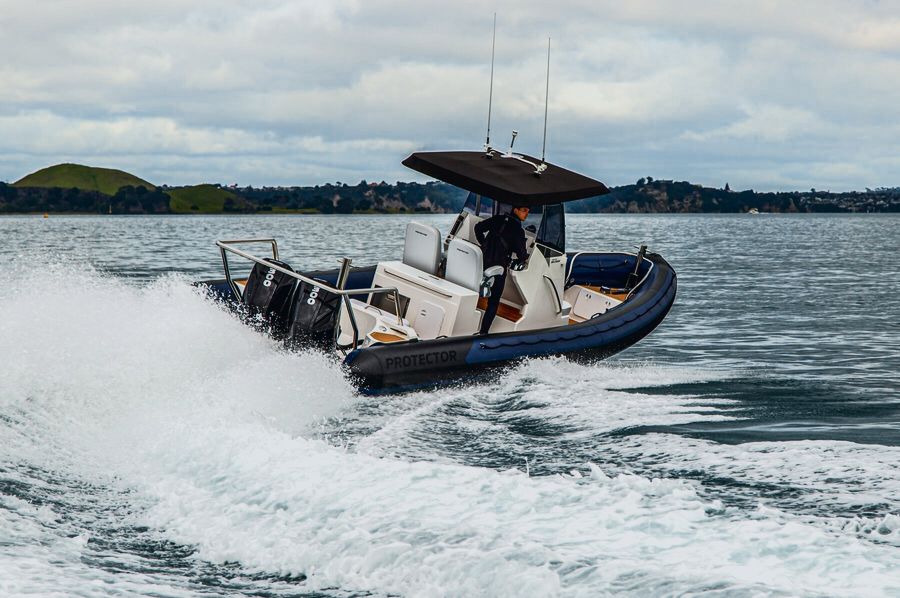
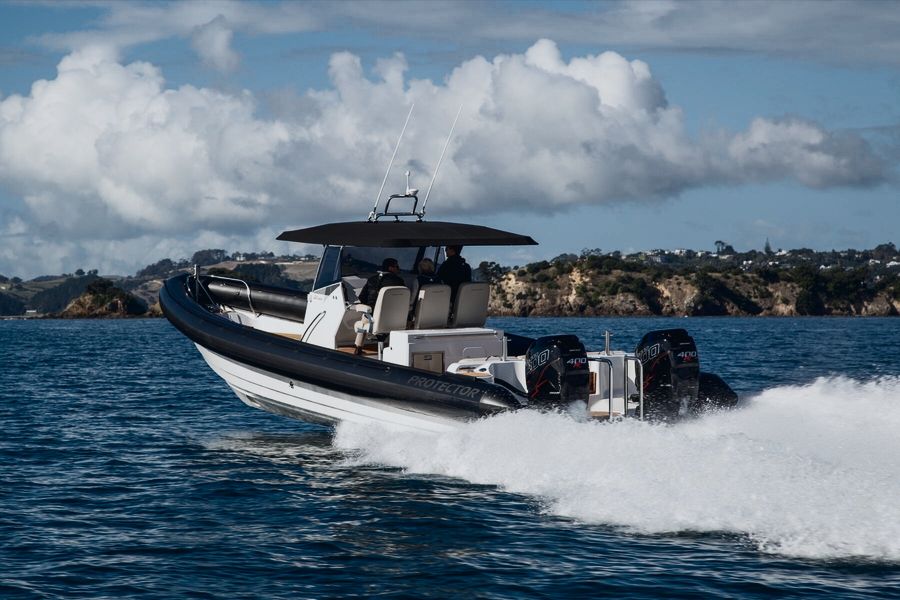
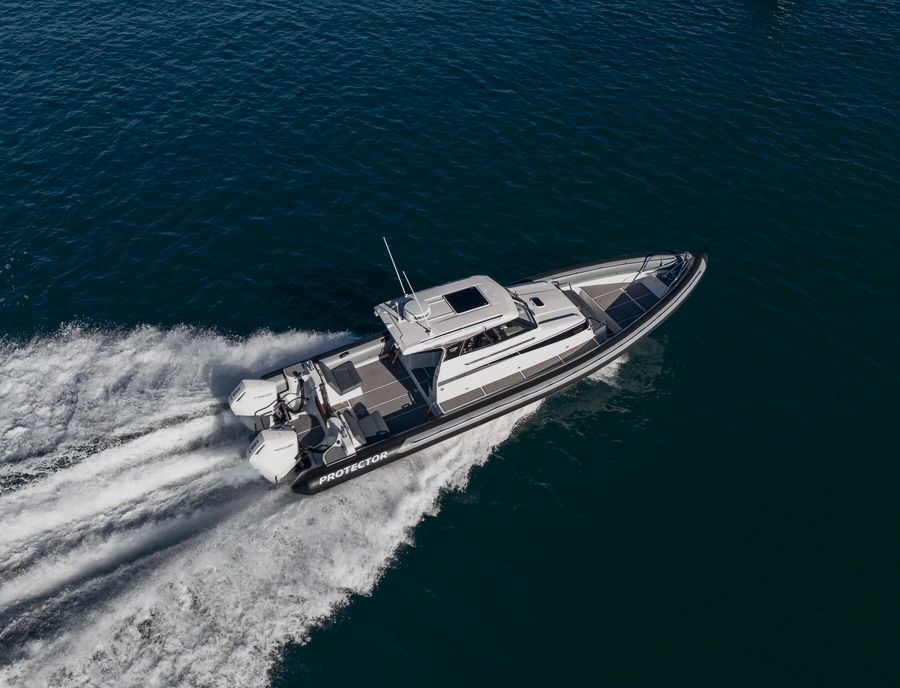
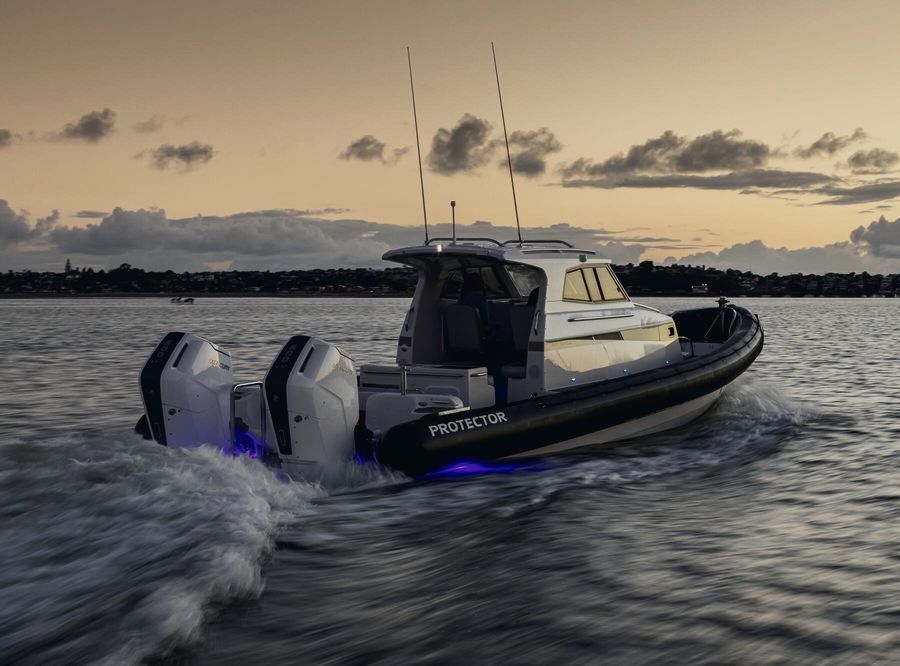
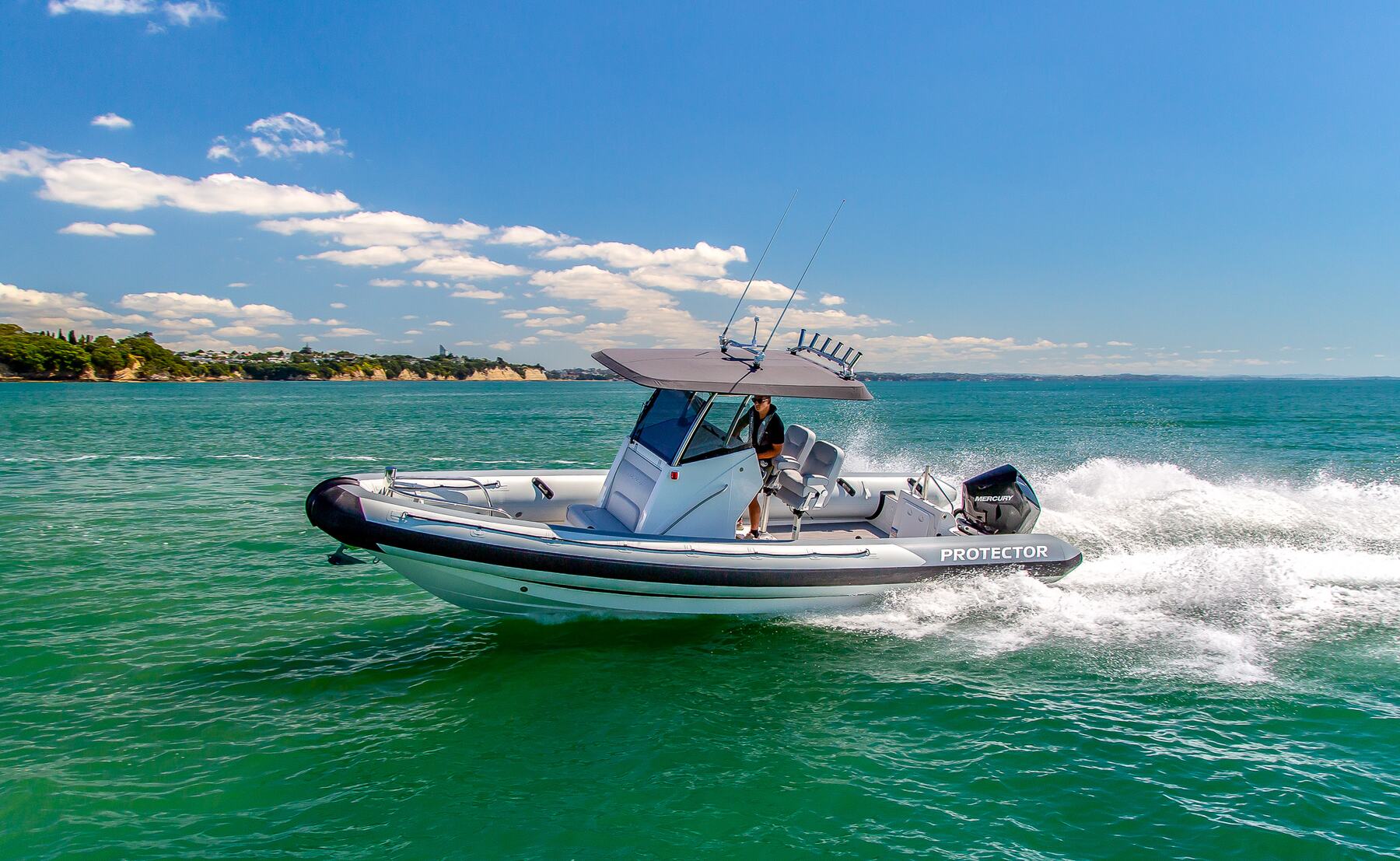
Two things make a RIB stable at speed in a chop: the deep-V hull cuts through waves rather than pounding across them, and the inflatable collar keeps the boat upright by adding buoyancy and damping exactly where a hardshell boat would dig a rail in and roll. Coming off a wave, the collar compresses and rebounds; a hardshell hull would slam instead, which is why RIB crews can hold higher speeds in rough water for longer without beating up the boat, the engines, or the people on board.
That same stability is what makes a RIB forgiving to handle in everyday use, not just heavy weather. Crew and passengers moving around the boat, sharp turns at speed, and coming alongside a dock, another vessel, or a yacht's swim platform: in each case, the collar's buoyancy and cushioning give a wider margin for error than a traditional hardshell hull offers. It's a large part of why RIBs are the default choice for professional crews working in demanding conditions, and why they're comfortable for recreational owners and guests who aren't professional boat handlers.
Commercial vs Recreational Uses
Coastguard fleets, military and police units, harbour pilots, and marine research operators run RIBs because they combine low-maintenance durability, a high payload-to-weight ratio, and stability at speed. That combination lets a RIB carry a full crew and equipment, get on scene fast, and hold position safely alongside ships, docks, or other vessels in rough conditions.
Recreationally, those same qualities suit different jobs. RIBs are a standard superyacht tender because they're stable to board from a swim platform and easy to handle at low speed near a hull worth protecting. They're a common dive-boat choice because low freeboard and a forgiving collar make water entry and re-boarding easier. And they work as fast, capable sport and chase boats for owners who want genuine performance without the upkeep a delicate hardshell finish can demand.
RIB vs Traditional Planing Hull
The table below sets out where a RIB sits relative to the boat type it's most often compared with: a traditional hardshell planing hull.
| Feature | RIB | Traditional planing hull |
|---|---|---|
| Hull material | Rigid fibreglass or aluminum hull + inflatable collar | Rigid fibreglass, aluminum, or timber, no collar |
| Stability at speed | High: collar dampens roll and impact | Moderate: depends on hull design and beam |
| Load / payload capacity | High: rigid hull carries load, collar adds buoyancy | High, but less forgiving of overload |
| Durability / maintenance | Low-maintenance; collar is durable but needs periodic servicing | Low-maintenance; no collar to service |
| Typical use | Commercial patrol/coastguard, tenders, dive and sport boats | Cruisers, sportfishing, day boats |
Where Protector Fits in the RIB Category
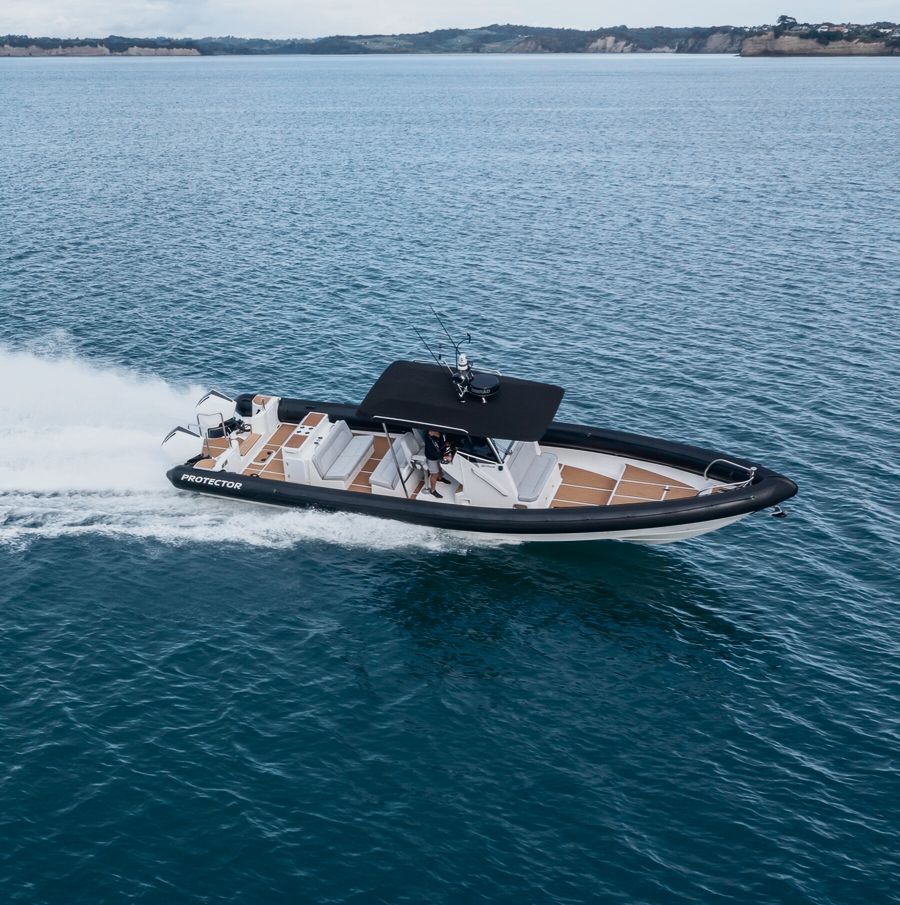
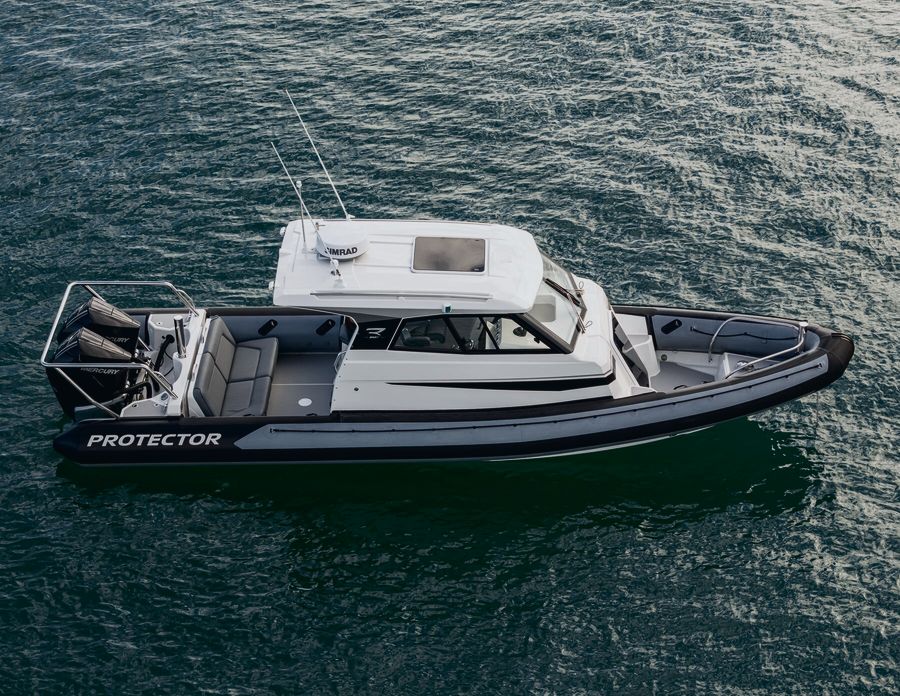
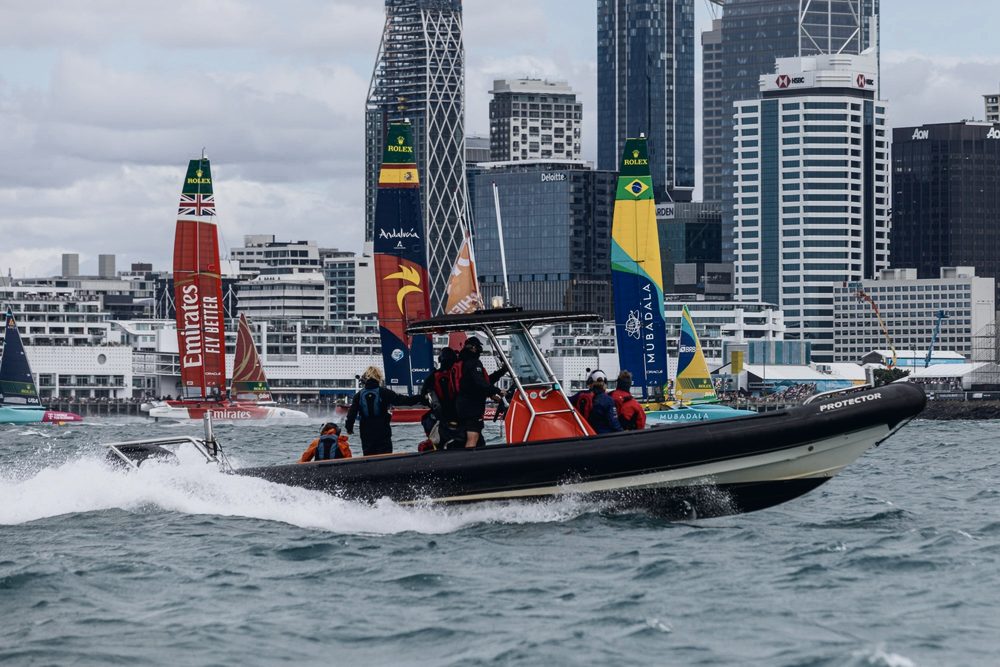
Protector RIBs, built by Rayglass Boats in Auckland, New Zealand, are one example of a manufacturer building to both ends of that spectrum, commercial and recreational, from a shared hull platform. Rayglass has built Protector RIBs in Auckland for decades, supplying chase boats for SailGP since 2018 and support vessels for America's Cup regattas since 2000, including craft for umpires, patrol, photography, and crowd control. A number of ex-America's-Cup Protectors were later refitted for New Zealand Coastguard duty. Protector RIBs are exported internationally, used by superyacht owners, coastguard fleets, military, police, and research operators alike.
In Canada, Protector is sold and supported exclusively through Protector Boats Canada, a Vancouver-based dealer with 25 years of rigid inflatable experience. Protector Boats Canada looks after every Protector sold in the country, from the first consultation to handover. See the current model range on our boats page.
Frequently asked questions
What does RIB stand for?
RIB stands for rigid inflatable boat: a boat with a rigid fibreglass or aluminum hull and an inflatable buoyancy collar around the topsides.
Are RIBs used commercially or just for recreation?
Both. RIBs are widely used commercially (coastguard, military, police, harbour pilot, and research operators) because of their stability at speed, durability, and payload capacity, and recreationally as yacht tenders, dive boats, and sport boats.
What material is the inflatable collar made from?
Most RIB collars are made from Hypalon, a synthetic rubber valued for UV and abrasion resistance, or PVC, which is lighter and more affordable but generally less durable in harsh climates.
Who builds Protector RIBs?
Protector RIBs are built by Rayglass Boats in Auckland, New Zealand. In Canada, Protector is sold and supported exclusively through Protector Boats Canada, based in Vancouver, BC.